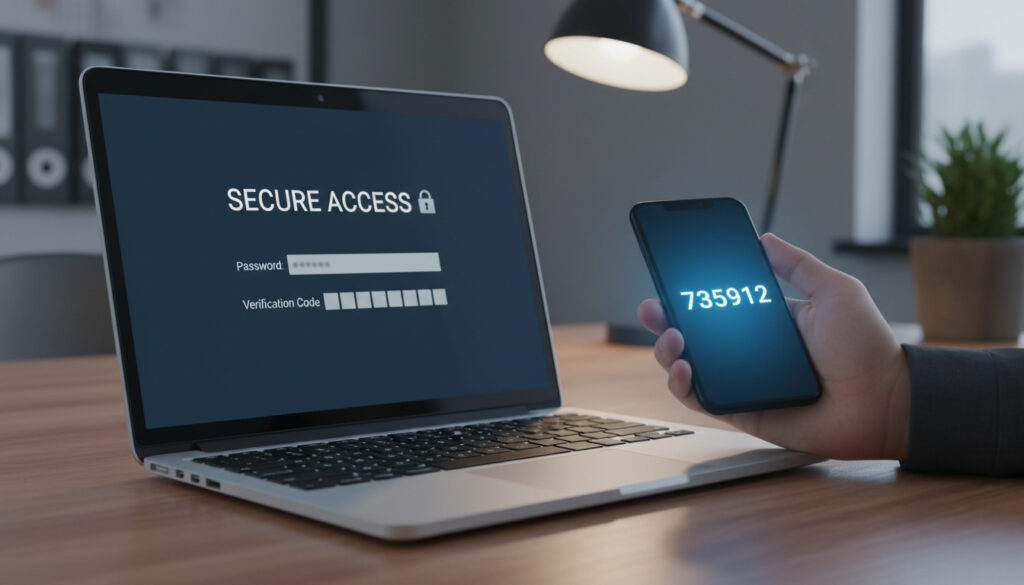
What Is Two Factor Authentication: A Complete Guide to Digital Identity Protection
Every day, billions of login credentials circulate on dark web marketplaces. While strong passwords remain essential, they represent a single point of failure that sophisticated phishing campaigns and brute-force attacks exploit with alarming efficiency. Two factor authentication (2FA) closes this vulnerability by demanding a second evidence category before granting access to sensitive accounts.
Unlike password-only systems, 2FA operates on the principle that compromising two distinct authentication factors requires exponentially more effort than stealing a text string. National Institute of Standards and Technology guidelines categorize these factors into three groups: knowledge (passwords or PINs), possession (physical devices or tokens), and inherence (biometric data).
The Three Pillars of Identity Verification
Something You Know encompasses passwords, security questions, and memorized PINs. This factor suffers from reuse across platforms and susceptibility to social engineering, yet remains ubiquitous due to implementation simplicity.
Something You Have includes smartphones generating time-based codes, USB security keys, and smart cards. Physical possession creates geographic constraints that remote attackers struggle to bypass.
Something You Are covers fingerprint scans, facial recognition, and iris patterns. Biometric data offers convenience but raises irreversibility concerns if compromised.
Critical Findings on Modern Threat Mitigation
Recent incident response analyses reveal that accounts protected by multi-factor authentication experience 99.9 percent fewer automated attacks than those relying solely on passwords. Cybersecurity and Infrastructure Security Agency research indicates that SIM-swapping remains the primary vector for defeating SMS-based verification, prompting recommendations for app-based or hardware solutions.
Enterprise adoption correlates strongly with regulatory compliance requirements. Financial institutions implementing 2FA report 80 percent reductions in account takeover fraud compared to legacy authentication schemes. However, user friction persists as the dominant barrier to universal deployment, with abandonment rates increasing 15 percent for every additional step added to login workflows.
Comparative Analysis of Verification Methods
| Method | Security Level | Convenience | Primary Vulnerability |
|---|---|---|---|
| SMS Codes | Moderate | High | SIM swapping, SS7 interception |
| TOTP Apps | High | High | Device theft without encryption |
| Hardware Keys | Very High | Moderate | Physical loss, supply chain attacks |
| Push Notifications | Moderate | Very High | Notification fatigue attacks |
| Biometrics | High | Very High | Template database breaches |
Hardware keys adhering to FIDO Alliance standards provide phishing-resistant cryptography by verifying the domain origin of authentication requests. This prevents credential replay attacks that successfully bypass other second factors.
Technical Implementation Standards
Time-based One-Time Password (TOTP) algorithms generate six-digit codes synchronized through shared secrets and Unix timestamps. Microsoft authentication protocols extend this foundation with number-matching requirements that defeat push-bombing attacks.
WebAuthn standards enable direct communication between browsers and hardware authenticators using public-key cryptography. Unlike TOTP implementations, these asymmetric keys never leave the physical device, eliminating server-side database theft risks. Implementation requires JavaScript API integration and secure enclave support on mobile devices.
Evolution of Identity Verification
The authentication landscape transformed dramatically from early token-based systems to modern passwordless architectures. Understanding this progression clarifies current security recommendations.
- : RSA introduces SecurID hardware tokens generating time-synchronized codes for corporate networks
- : Banking sectors mandate SMS verification for high-risk transactions despite known SS7 protocol vulnerabilities
- : Google launches two-step verification for consumer accounts using SMS and backup codes
- : FIDO specifications release, enabling cryptographic challenge-response without shared secrets
- : Apple, Google, and Microsoft commit to expanded passwordless support across major platforms
- : Passkey adoption accelerates, storing credentials in secure hardware elements rather than cloud servers
Clarifying Common Misconceptions
Multi-factor authentication does not guarantee absolute immunity from compromise. Advanced persistent threat actors employ real-time phishing proxies that intercept both passwords and time-based codes during active sessions. National Cyber Security Centre guidance emphasizes that 2FA primarily eliminates automated credential stuffing and bulk phishing campaigns rather than targeted espionage.
Backup codes serve as critical recovery mechanisms when primary devices fail or become unavailable. Users frequently neglect to print or securely store these single-use codes, resulting in permanent account lockouts that support teams cannot override without compromising security protocols.
Risk Assessment in Modern Contexts
Attackers increasingly focus on session hijacking after legitimate authentication occurs. While 2FA protects the initial entry point, persistent cookies and refresh tokens require additional binding to device fingerprints and behavioral analytics. Google Threat Analysis Group reports demonstrate that state-sponsored actors now prioritize browser vulnerability exploitation over authentication bypass techniques.
Organizations must balance security density against operational continuity. Mandatory 2FA deployment across customer-facing platforms shows 50 percent higher retention of security-conscious users offset by 20 percent churn among convenience-focused demographics. Risk-based implementations that trigger additional verification only for anomalous locations or devices optimize this equation effectively.
Expert Perspectives on Implementation
The shift from possession-based to cryptographic possession factors represents the most significant authentication advancement in two decades. Hardware-bound keys eliminate the server-side storage risks that plagued earlier implementations.
— Research Director, Enterprise Security Institute
Users treat SMS codes as magic security dust without understanding the underlying carrier vulnerabilities. Education about SIM porting protections proves as important as the technical controls themselves.
— Principal Threat Analyst, Financial Fraud Prevention Unit
Strategic Imperatives for Digital Protection
Implementing two factor authentication represents a baseline hygiene requirement in contemporary threat environments. While biometric convenience and hardware key security offer superior protection compared to SMS delivery, any secondary factor substantially exceeds password-only resilience against automated attacks.
Organizations should prioritize password security best practices alongside 2FA deployment, as weak master passwords undermine the entire verification chain. Regular audits of authentication logs help identify suspicious patterns that indicate credential compromise despite second-factor protections.
Looking forward, FIDO2 standards promise ubiquitous passwordless authentication using device-native biometrics tied to cryptographic keys. This evolution eliminates shared secrets entirely, rendering phishing attacks economically unviable for most threat actors. Transition planning should accommodate both legacy 2FA systems and emerging passkey architectures during the multi-year migration period.
Frequently Asked Questions
Does two factor authentication prevent all hacking attempts?
Two factor authentication blocks the vast majority of automated and mass-phishing attacks, but determined adversaries using real-time phishing proxies or social engineering can still compromise protected accounts. 2FA specifically eliminates credential stuffing attacks where hackers use breached password databases to access multiple services.
What happens if I lose my phone with the authenticator app?
Most services provide backup codes during initial 2FA setup that allow account recovery without the primary device. Store these codes offline in a secure location. Alternatively, many platforms support multiple registered devices, enabling authentication through a secondary phone or hardware key.
Are authenticator apps more secure than SMS codes?
Yes. SMS-based verification remains vulnerable to SIM swapping attacks, where attackers transfer phone numbers to devices they control. Authenticator apps generate codes locally on your device without network transmission, eliminating carrier-based interception risks. Apps like Google Authenticator or Authy also function offline and work internationally without roaming charges.
Should businesses mandate 2FA for all user accounts?
Security benefits strongly support mandatory implementation for administrative accounts and high-value transactions. Consumer accounts benefit from risk-based triggers requiring 2FA only for sensitive operations or unfamiliar devices. Mandatory deployment across all interactions increases security but may reduce conversion rates in customer-facing applications.